What if your backyard felt like a private resort that you could use almost year-round? In Town and Country, large lots and refined homes make outdoor living a major part of the estate experience. Whether you are upgrading for your own enjoyment or preparing to list, the right plan can deliver comfort, beauty and market appeal. In this guide, you will learn which features stand out locally, how to plan for St. Louis weather, and what to know about permits and timelines. Let’s dive in.
Why outdoor living matters here
Town and Country is known for generous lots and a polished estate look. Buyers in this market expect thoughtful outdoor amenities that extend daily living and support entertaining. National trend reporting shows strong demand for pool terraces, covered outdoor rooms, and built-in kitchens for entertaining, with a continued rise in specialty appliances like pizza ovens (industry trend summary). Local luxury listings also highlight pool terraces, covered patios, pool houses, and mature landscaping as top selling features, signaling what stands out to buyers today (recent Town and Country listings).
Plan for St. Louis climate
St. Louis summers are hot and humid, and winters bring freeze and thaw cycles. The metro averages about a 205-day growing season and roughly 41 inches of annual precipitation (climate normals). Plan your design with this in mind:
- Choose materials that handle freeze-thaw and resist staining.
- Provide shade and ventilation for summer comfort.
- Mix evergreen structure with regionally adapted perennials for four-season interest.
- Consider maintenance access for snow, leaf drop, and seasonal service.
Signature estate features that impress
Pool terraces and water features
A well-sited pool with a generous terrace remains a hallmark of estate living. Sun shelves, lap lanes, or vanishing edges can work where the site allows, while integrated lounge areas keep the space social and flexible. National reporting confirms pools and lounging terraces remain core features in high-end outdoor projects (trend summary).
Covered outdoor rooms
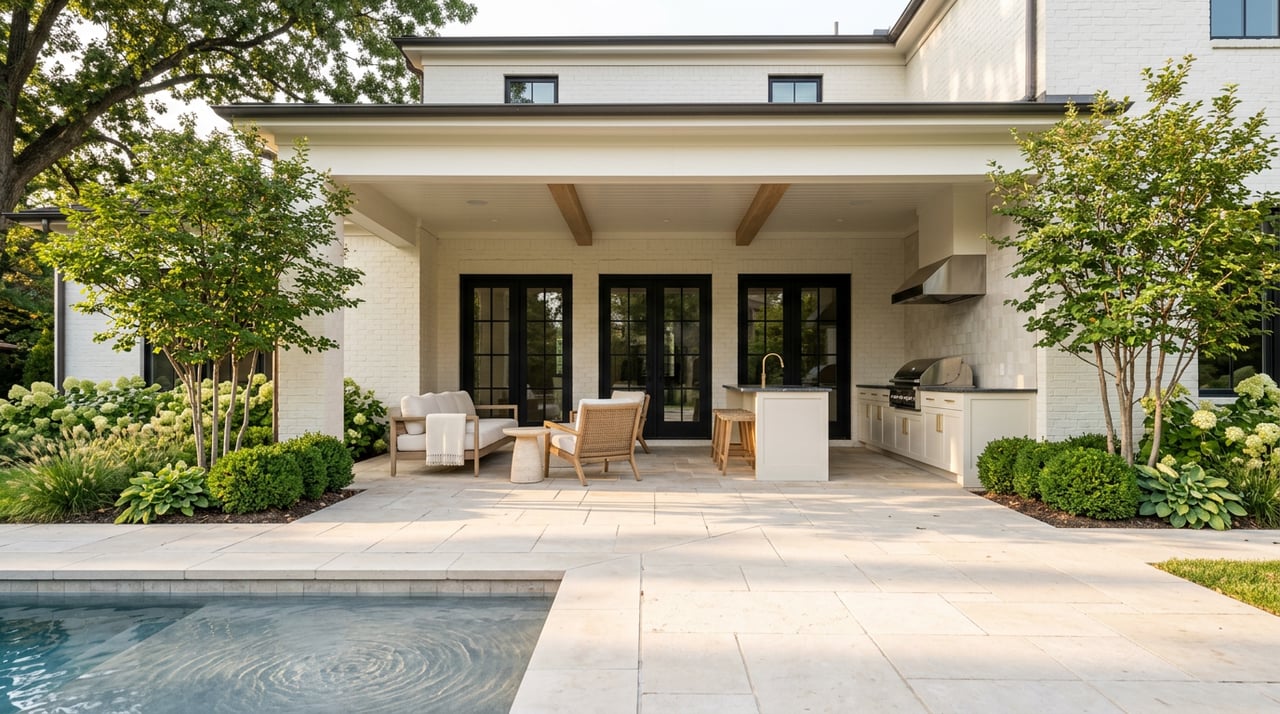
Covered patios, screened porches, and lanais create protected living zones that extend use into spring and fall. These spaces pair well with built-in heaters and lighting to stretch your outdoor season even further (trend summary).
Outdoor kitchens that cook
Estate-level outdoor kitchens often include a built-in grill, side burners or a pizza oven, refrigeration, a sink, and covered prep space. Use outdoor-rated appliances and weatherproof cabinetry, and plan for gas and electrical in your construction documents. Recent product trend coverage notes a rise in pizza ovens and specialty outdoor appliances for high-end projects (kitchen and bath trend insights).
Pool houses and cabanas
A thoughtfully designed pool house or cabana supports entertaining and storage and keeps foot traffic outside. Town and Country permits pool houses up to 500 square feet and 20 feet in height, with a 30-foot setback from property lines, and they cannot be used as bedrooms (Pool House Guide). Many include a wet bar, bathroom, and changing area.
Fire features and heating
Outdoor fireplaces, fire pits, and infrared or gas heaters create cozy gathering spots and extend your season. Integrate heaters and controls during design so mechanicals and clearances are safe and discreet (trend summary).
Landscape rooms and long views
Layered plantings, specimen trees, and evergreen screens build privacy and frame long views from interior rooms. Local luxury listings often call out mature landscape and specimen trees as value drivers, making plant structure just as important as hardscape finishes (local listing examples).
Understand Town and Country rules
Before you design, confirm what is allowed on your lot. The City’s Planning and Permits page gathers the current guides, submittal checklists, and contacts for pre-application meetings (Planning & Permits).
Pools: size, setbacks, and barriers
Private in-ground pools are accessory structures and must meet the City’s swimming pool thresholds. The City’s guide sets a maximum of less than 1,000 square feet of water surface and requires at least 60 percent of the pool wall to be below grade for a standard permit. Larger or nonconforming pools can trigger conditional-use review. The guide also outlines barrier rules, including a minimum 48-inch fence height and self-closing, self-latching gates (Swimming Pool Guide).
Pool decks, equipment, and greenspace
Setbacks apply to decks and pool equipment, and greenspace rules can affect your allowable footprint. In Town and Country, water surface can count in greenspace calculations, so plan terrace sizes and mechanical locations early to avoid redesigns. Consult the municipal code for details and coordinate calculations with your designer or engineer (municipal code reference).
Pool houses and outbuildings
Pool houses are allowed within size and height limits and must follow setbacks. As noted, the typical cap is 500 square feet in area and 20 feet in height, with a 30-foot minimum from property lines. They may include bathrooms and kitchens but cannot be used as bedrooms (Pool House Guide). Larger structures can require Architectural Review Board or conditional-use review.
Stormwater and site disturbance
If your project disturbs more than a set threshold, stormwater mitigation is required. A common trigger is 2,500 square feet of site disturbance. Factor in detention, bioretention, or permeable paving as needed and coordinate early with a civil engineer. The City’s pool guide outlines stormwater and submittal requirements linked to many outdoor projects (Swimming Pool Guide).
Permitting timeline and process
Most estate-scale projects involve a clear submittal workflow. Expect to provide sealed plans where required and both paper and digital sets. Larger changes that need conditional-use or Architectural Review Board review often run on a multi-meeting schedule that can take 60 to 90 days or more, depending on timing. A pre-application meeting with the City Planner or Code Official is a smart first step to confirm setbacks, greenspace calculations, and potential ARB needs before you finalize design (Planning & Permits).
Materials that last in this climate
Hardscape surfaces
For pool terraces and patios, porcelain pavers are popular for their low porosity, stain resistance, and freeze-thaw durability. They also allow visual continuity with interior finishes. Proper installation with movement joints is essential for long-term performance (porcelain paver guide).
Decking choices
Composite and capped composite decking offers low maintenance and long warranties, while exotic hardwoods like Ipe deliver a premium look with higher upfront cost and care needs. Specify joist spacing, hidden fasteners, and an experienced installer to avoid issues over time (decking comparison).
Lighting, audio, and heating
Plan zoned low-voltage lighting, recessed step and soffit lights, weatherproof speakers, and integrated gas or infrared heaters as part of the initial design. Running conduit and access for service during construction keeps the result clean and durable (trend summary).
Outdoor kitchens and utilities
Use outdoor-rated appliances and weather-resistant cabinetry. Plan safe gas routing, proper ventilation, and electrical capacity on your drawings and review them with the building and electrical officials during permitting. Specialty appliances like pizza ovens require attention to clearances and material heat ratings (kitchen and bath trend insights).
Planting for privacy and low upkeep
Favor native and regionally adapted plants that handle heat and cold and support pollinators. The Missouri Department of Conservation’s Landscaping for Nature resources help you assemble layered plant palettes with shade trees, structural shrubs, and perennial borders. Typical local choices include native perennials such as Echinacea, Rudbeckia, and Liatris for color and pollinator value. Evergreen screens can break sightlines and buffer activity zones while aligning with City expectations on landscaped greenspace (MDC planting guidance).
Maintenance planning you will actually use
Pools, outdoor kitchens, and irrigation systems benefit from scheduled service. Budget for seasonal pool equipment checks, winterization of plumbing and appliances, pruning, and irrigation blow-out. Include clear service access for pumps and heaters in your site plan and confirm setback rules for mechanicals with the City. The Swimming Pool Guide and reputable local contractors can help you map annual maintenance needs (Swimming Pool Guide). For ongoing landscape care, local providers outline maintenance-focused offerings that keep estate properties looking their best (maintenance services overview).
Quick-start checklist
- Confirm pool feasibility. Is your proposed pool under 1,000 square feet of water surface and at least 60 percent below grade? If not, plan for conditional-use review (Swimming Pool Guide).
- Map setbacks and greenspace. Identify pool equipment, terraces, and any outbuildings early to align with setbacks and greenspace calculations (municipal code reference).
- Plan for stormwater. If disturbance could exceed about 2,500 square feet, coordinate detention or permeable solutions with a civil engineer (Swimming Pool Guide).
- Coordinate ARB and any HOA. Confirm City Architectural Review Board timing and any private covenants at the start (Planning & Permits).
- Choose climate-ready materials. Specify frost-resistant porcelain or vetted natural stone for terraces and select decking that matches your maintenance goals (porcelain paver guide; decking comparison).
- Build a planting plan. Use MDC resources to create layered, low-maintenance plantings that deliver privacy and seasonal interest (MDC planting guidance).
- Budget for upkeep. Factor in pool service, irrigation, pruning, and winterization from the start (Swimming Pool Guide).
Ready to elevate your estate
A beautiful outdoor living plan can transform daily life and strengthen market appeal in Town and Country. If you are considering upgrades before selling, or want help sequencing design and permitting, our team can guide scope, coordinate pre-sale improvements, and present your property at a premium standard. For thoughtful strategy and hands-on oversight, connect with Katie McLaughlin & Liz McDonald.
FAQs
What outdoor features add the most value in Town and Country?
- Buyers respond to pool terraces, covered outdoor rooms, outdoor kitchens, and mature landscaping. National trend data also shows growing demand for integrated heating and specialty cooking appliances (trend summary).
Do I need a permit for a pool or pool house in Town and Country?
- Yes. Pools must meet the City’s thresholds, including less than 1,000 square feet of water surface and at least 60 percent of the wall below grade, with safety barriers required. Pool houses are generally capped at 500 square feet and 20 feet in height and cannot be used as bedrooms. Larger projects can trigger conditional-use or ARB review (Swimming Pool Guide; Pool House Guide).
How long does permitting and review usually take in Town and Country?
- Standard permits can move faster, but larger changes that require conditional-use or Architectural Review Board review commonly follow a multi-meeting schedule that may run 60 to 90 days or longer. Ask for a pre-application meeting to confirm your path (Planning & Permits).
What materials work best for St. Louis freeze-thaw conditions?
- Frost-rated porcelain pavers are popular for terraces due to low porosity and stain resistance, and composite or capped composite decking reduces maintenance demands. Proper installation and movement joints are key (porcelain paver guide; decking comparison).
How can I design privacy on a large lot without heavy fencing?
- Use layered plantings with evergreen screens and specimen trees to break sightlines while adding seasonal interest. The Missouri Department of Conservation provides regionally adapted plant lists and design tips for low-maintenance privacy (MDC planting guidance).